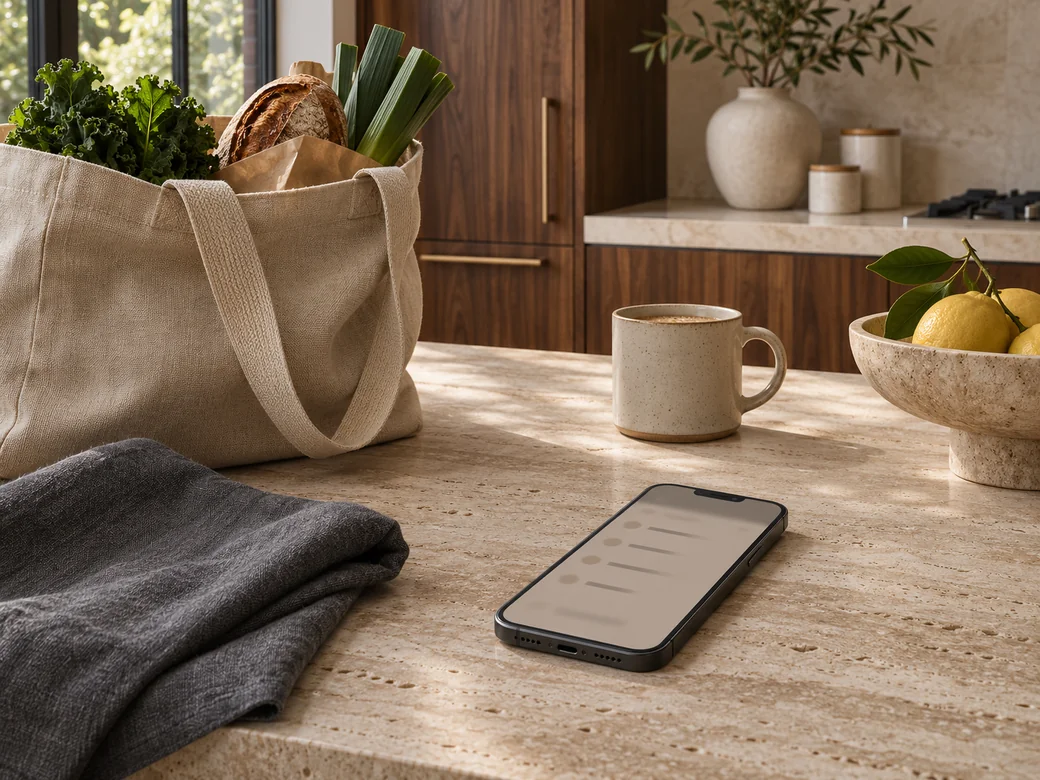
When meetings, travel and meal decisions keep getting in the way, Rudy builds your training around the time you have and helps you adjust when the week changes.
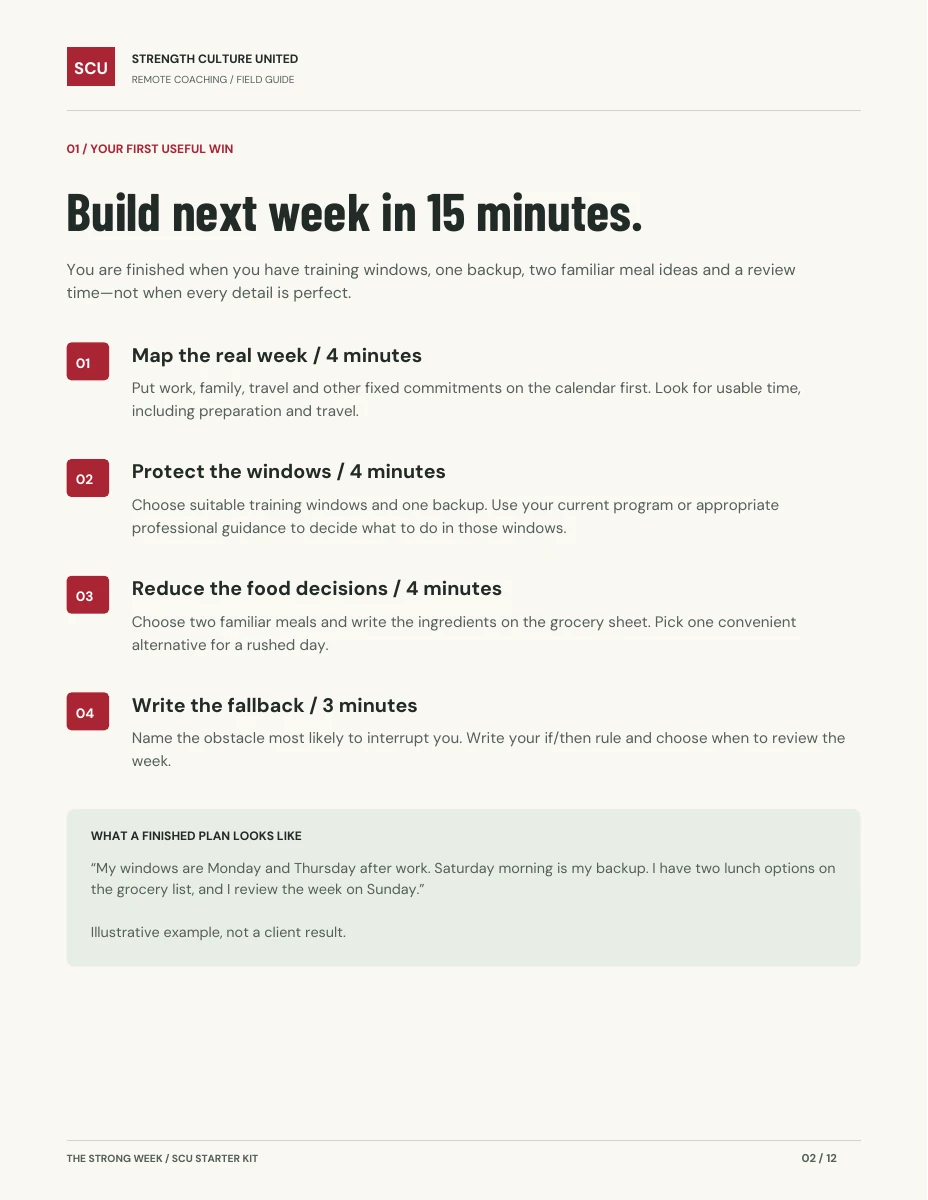
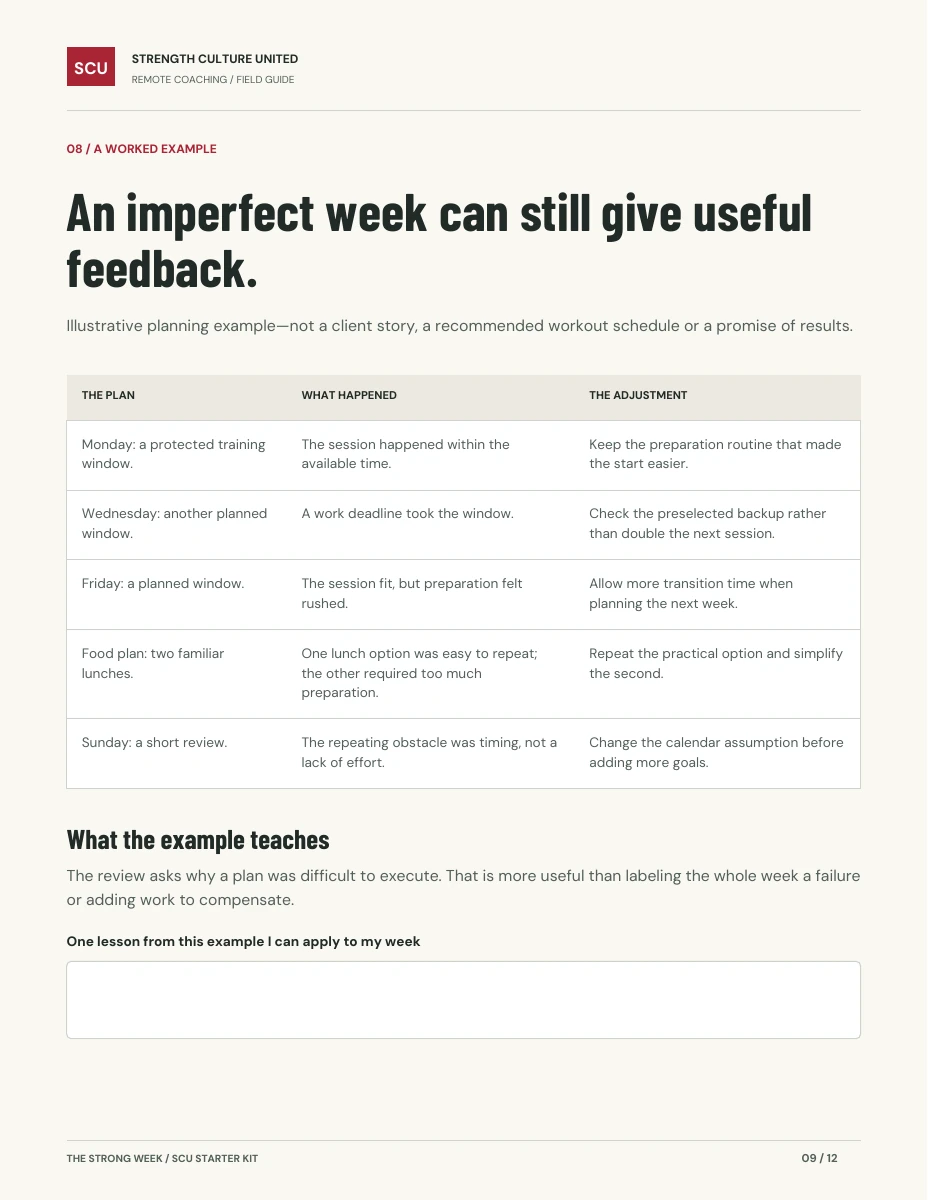
You’re traveling Tuesday through Friday. The hotel gym has dumbbells, your workdays are booked with meetings, and you have client dinners on Wednesday and Thursday. On your usual weekly Zoom before the trip, you and Rudy pick two training windows and one backup.
Tuesday after hotel check-in
Use the first window for a session planned around the hotel dumbbells.
Thursday before meetings
Use the early window, leaving the evening free for your client dinner.
Friday morning backup
If Thursday is taken up by work, use a shorter session before checkout, if it fits.
Keep dinner flexible
Check the menu ahead of time if you can and pick one option you’d enjoy. If the group ends up sharing dishes, go with what works at the table and use your food log to bring any questions to your next check-in.
Inside the client app
See what you’ll use.
Pick a tool to see how you can log food, find recipes, track habits and review progress. Rudy uses what you share to guide the next coaching conversation.
Platform examples with sample data. Your assigned tools and client view may differ.
Included in both coaching plans
From your meals to your grocery order.
Set your budget, food preferences and substitution rules with Rudy. You review the order before Rudy places it. You pay for the groceries.
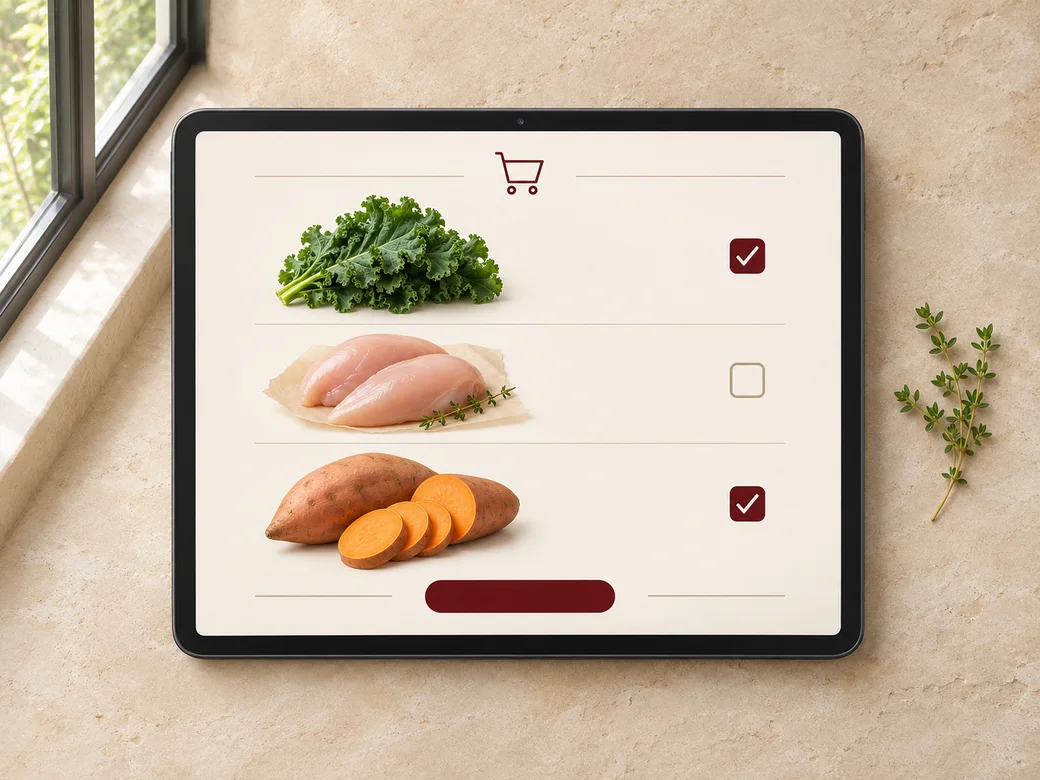
An illustrative example of the ordering process
Agree on what works for you.
Share what you like to eat, your grocery budget and what you’re happy to swap. Chicken bowls with greens and sweet potato might be an easy workday lunch.
Review the proposed order.
Rudy puts together the groceries for your meals. Review the items and estimated total, request any changes and approve the order.
Rudy places the order.
Once you approve it, Rudy places the order. You pay for the groceries.
Both options include a training plan built for you, nutrition guidance and weekly coaching support. Grocery ordering is included. You pay for your groceries. Prices are in USD.
Three-month package
$749 per month
$2,247 per three-month term. Save $153 compared with three months at the monthly rate.
Automatically renews for another three-month term unless canceled before the next term. Rudy discusses renewal with you beforehand.
Month to month
$800 per month
Monthly commitment with the same coaching support.
Automatically renews monthly until canceled before the next billing date.
Included with both plans
Your first week, planned.
Once you enroll, Rudy helps you set up a week around your calendar.
Training on your calendar
Workout windows that fit your schedule and equipment.
A backup for busy days
One alternate training window for when work runs late.
Two meals worth repeating
Meal ideas you like, with a plan for what to order.
Your first check-in
A clear time to share how the plan is working.
Know what you’re working toward.
At onboarding, choose two or three measures to follow over the next 90 days. You might track sessions completed, strength on a key lift, or how often you stick to your planned meals.
Rudy uses those same measures in your monthly report and 30-minute fourth-week Zoom to help you decide what to adjust.
View a sample monthly progress reportSee four weeks of data, what Rudy noticed, and the decisions that shape the next month.
Illustrative example
Monthly progress report
Month one of a 90-day plan. All figures and coaching notes in this example are fictional.
The month in review
The client wanted to fit two training sessions a week around work, get stronger on a key lift, and make workday lunches more predictable. They completed every planned session in three of four weeks. Travel disrupted both training and meal prep, so next month’s plan starts with the travel dates.
Measures agreed at onboarding
Measure
Prior 4 weeks
This month
Training sessions completed
5 of 8
7 of 8
Goblet squat working set
35 lb × 8 reps
40 lb × 8 reps
Planned lunches followed
4 of 12
8 of 12
Week by week
Week 1
Sessions
2 of 2
Planned lunches
2 of 3
Put both sessions on the calendar before the workweek started.
Week 2
Sessions
2 of 2
Planned lunches
2 of 3
A Thursday backup saved a session after a Wednesday meeting ran late.
Week 3 · Travel
Sessions
1 of 2
Planned lunches
1 of 3
Logged a hotel session. A schedule change took out the second workout, and lunches were mostly decided on the fly.
Week 4
Sessions
2 of 2
Planned lunches
3 of 3
Returned to the usual schedule and chose lunches before placing the grocery order.
Training and technique
Comparable working sets on the usual equipment
Exercise
Start
End of month
Goblet squat
35 lb × 8
40 lb × 8
Dumbbell Romanian deadlift
30 lb each × 10
35 lb each × 10
Chest-supported dumbbell row
25 lb each × 10
25 lb each × 12
Rudy’s read. The client used more load at the same reps on two lifts and added two reps at the same load on the row. Two video clips helped identify a useful cue for the squat. Next month starts at 40 lb with an emphasis on a controlled descent. Hotel sessions count toward consistency and are reviewed separately from the performance comparison.
Nutrition and meal planning
Complete food logs
16 of 28 days
Average energy on logged days
2,140 kcal vs. a 2,200 kcal plan
Average protein on logged days
128 g vs. a 135 g target
Rudy’s read. Planned lunches went from four to eight. The travel week accounted for two of the four missed lunches, so the next change is choosing lunch before travel days. Keep the two at-home lunches that worked and pick two portable options before the next trip. The averages cover complete log days only.
Daily habits and recovery
Steps on recorded days
6,400 per day · 23 of 28 days
Sleep on recorded nights
6 hr 58 min · 21 of 28 nights
Sleep during the work trip
6 hr 14 min · 3 recorded nights
Rudy’s read. Recorded sleep averaged 44 minutes less on the work trip than across the month. For the next one, put the shorter workout in the day with the tighter schedule and look for an open walking window at lunch.
Optional measurements
When these measures are relevant to a client’s goals, record them under similar conditions and review them alongside training and habits.
Average morning weight
184.6 lb → 183.8 lb · three readings in each comparison week
Waist at the same landmark
36.5 in → 36.25 in · first and final week
Progress photos
Optional front and side photos at the start and end of the month, under similar lighting.
Decisions for month two
Training. Put two sessions and one backup on the calendar each week. Aim for at least seven of eight sessions and send one squat clip for a technique check.
Meals. Aim for nine of twelve planned lunches. Use two repeatable meals at home and choose travel-day lunches before departure.
Travel and recovery. Identify the tightest day on the itinerary and schedule the shorter session there. Review how it went at the next weekly check-in.
At the 30-minute fourth-week Zoom, Rudy and the client review the data, decide what to adjust, and agree on what to look for at the next check-in.
Open any of the 10 services for an illustrated example of how it could work in your week. App screens show sample data.
Training
Custom trainingKnow what to train when time is tight.
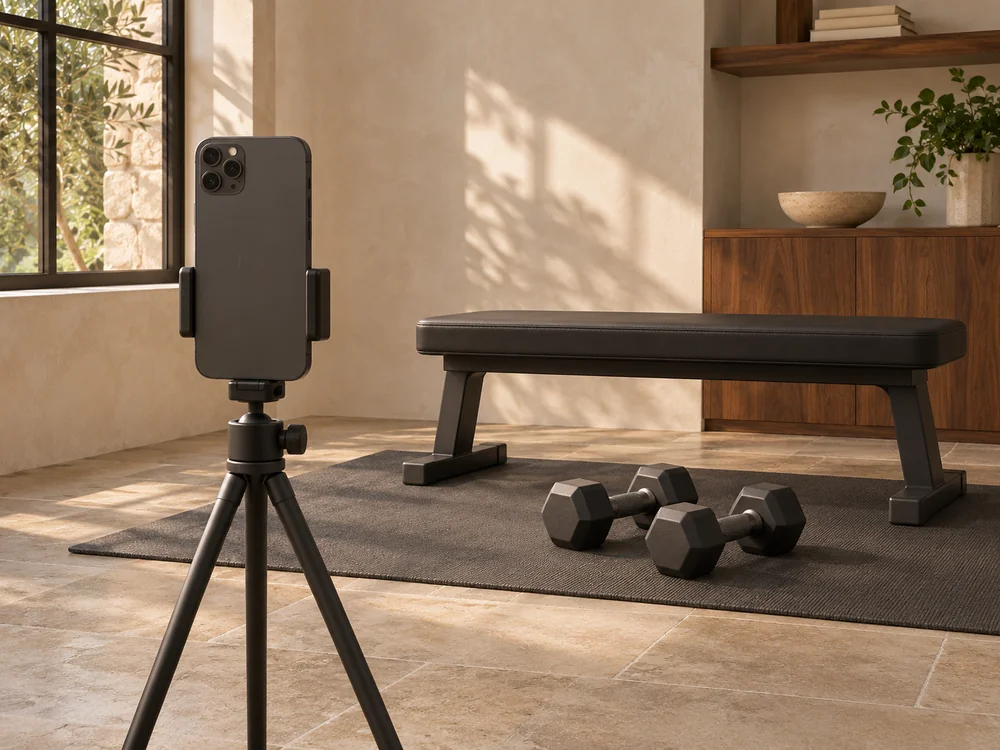
If you have three evenings free and dumbbells at home, Rudy builds your program around those training windows and the equipment you already have.
Plan adjustments upon requestKeep a workable plan when your week changes.
When a work trip changes your training week, tell Rudy what time and equipment you’ll have. Request changes to training, nutrition or recovery from there.
Exercise technique feedbackKnow what to work on in your next set.
Record a set of an exercise you want help with and send the clip for feedback on your technique.
Nutrition and groceries
Personalized nutrition guidanceMake food decisions that fit your goals and schedule.
Use your calorie and macro guidance, recipes and food logs to plan meals you can repeat. Share what you ate so Rudy can give you feedback.
Grocery orders placed for youHand off the ordering step.
Set your budget and preferences, review the proposed order and approve it. Rudy places the order, and you pay for the groceries. See how ordering works
Client resource vaultGet practical help when you eat out or travel.
If you’ll be eating out on a work trip, pull up the relevant guide. The vault also has resources for groceries and everyday habits.
Coaching and progress
Daily check-ins, Monday–SaturdayGet guidance while the week is still happening.
Check in through the app Monday through Saturday. Replies are within one business day on support days, excluding announced holidays. The image shows sample app data.
Weekly one-on-one Zoom callsSet aside time to work through what’s getting in the way.
Bring questions to your private weekly Zoom review with Rudy. Calls are 20 minutes in weeks one through three and 30 minutes in week four.
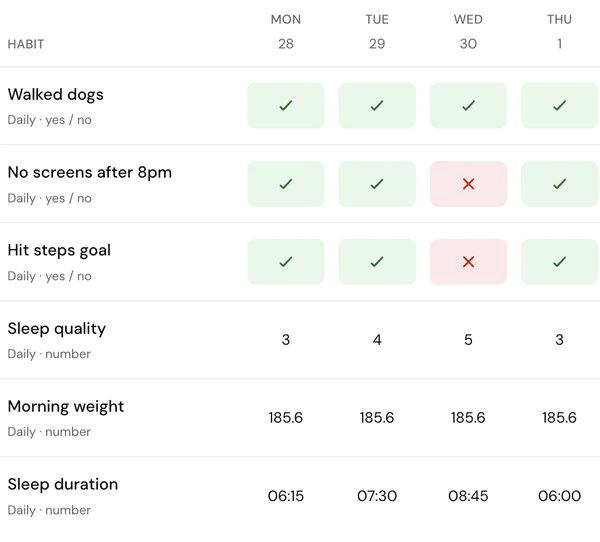
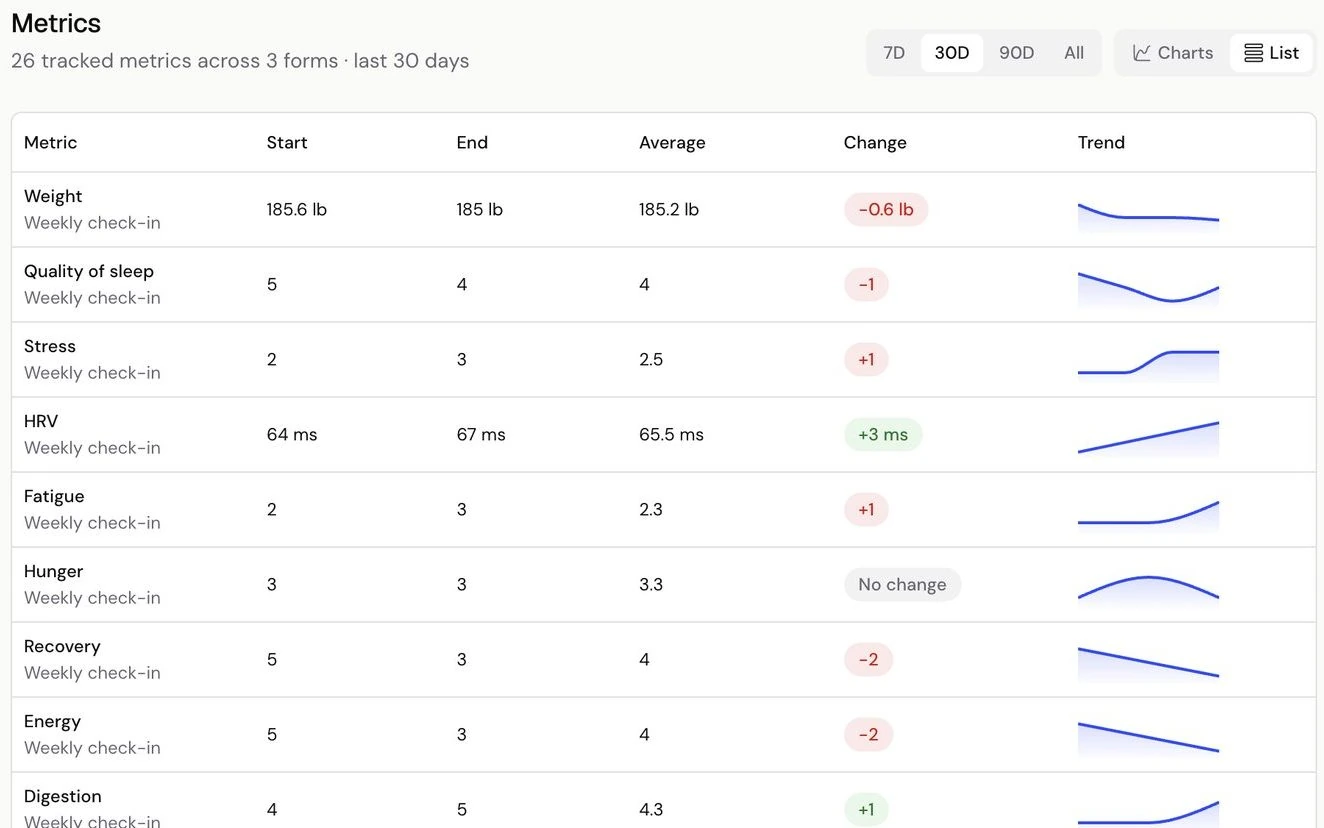
Progress trackingUse your own records to see what’s changing.
Review the habits, photos, measurements and training performance that are relevant to your goals. The image shows sample app data.
Monthly progress reportLeave the monthly review knowing what to adjust.
Review the measures you chose at onboarding and discuss what to change with Rudy during your 30-minute fourth-week call.
Before you apply
Common questions.
Do I need a gym membership?
You can train at home or in your own gym. Your plan is built around your equipment and experience.
When can I expect an app reply?
Within one business day, Monday through Saturday, excluding announced holidays.
How does grocery ordering work?
Agree on your budget, preferences and substitutions with Rudy. Review and approve each order before Rudy places it. You pay for the groceries.
What happens after I apply?
Rudy reviews your goals and contacts you to discuss the fit. An inquiry creates no payment or enrollment obligation.
Work with SCU
Make room for strength.
Tell Rudy what you need. Share your goals and the problem that keeps getting in the way, whether it’s time, meals or accountability.
Discuss the fit. Rudy reviews your inquiry and contacts you to talk through the support you’re looking for.
Decide whether to enroll. Review the plan, cost and terms before choosing.